 EigenSol Platform
How Much Does a Professional Website Cost in 2026?
A professional website in 2026 can cost anywhere from $1,000 to more than $100,000.
That is a wide range, but websites are not standardized products. A five-page business website, an online store, a real-estate portal, and a custom SaaS platform may all be called “websites,” even though the work required to build them is completely different.
For most small and medium-sized businesses, a professionally designed website will typically cost between $2,000 and $15,000. A highly customized corporate website may cost $10,000 to $50,000 or more, while advanced e-commerce websites and web platforms can exceed $100,000.
Published 2026 pricing guides also show considerable variation: some place professional small-business websites around $1,000–$5,000, while agency-built custom business websites can reach $10,000–$50,000 or more. This difference usually comes down to scope, customization, content, functionality, location, and the experience of the development team.
This guide explains what a professional website costs in 2026, what is included in that price, which factors increase development costs, and how to choose the right budget for your business.
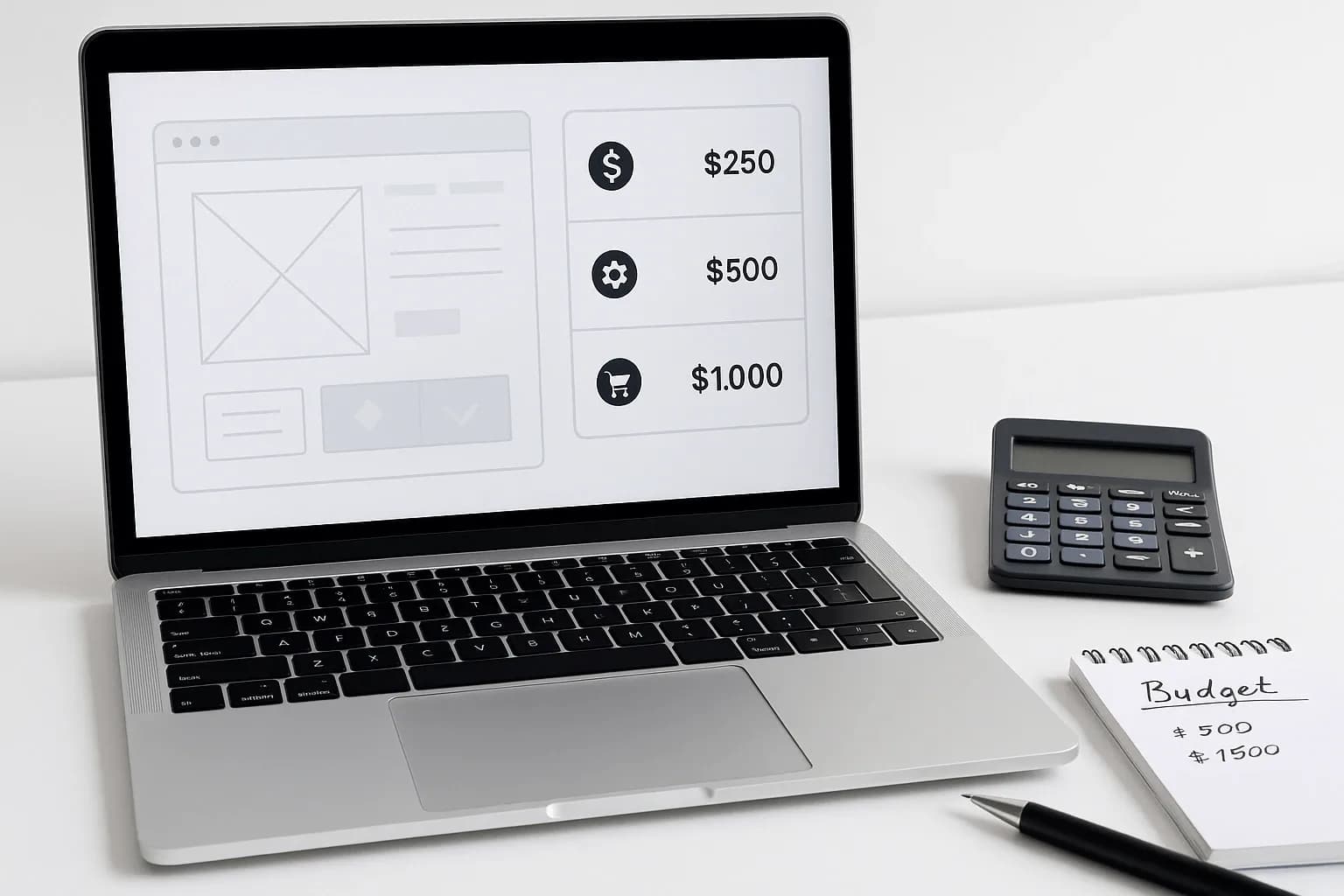
Average Website Development Cost in 2026
The following ranges provide a practical starting point for estimating your website budget.
Website typeTypical costSingle landing page$500–$3,000Basic template-based website$1,000–$5,000Professional small-business website$2,500–$10,000Custom corporate website$8,000–$30,000E-commerce website$10,000–$75,000+Custom portal or web application$20,000–$150,000+Enterprise website or platform$100,000–$500,000+
These categories can overlap. For example, a ten-page corporate website with custom animations, multilingual content, advanced SEO, CRM integration, and professionally written copy may cost more than a relatively simple online store.
The price should therefore be based on the required work rather than the number of pages alone.
What Does “Professional Website” Actually Mean?
A professional website is more than an attractive homepage.
It should communicate your brand clearly, work properly on different devices, load quickly, guide visitors toward an action, and remain secure and manageable after launch.
A professional website commonly includes:
Custom or professionally configured design
Responsive mobile, tablet, and desktop layouts
Clear navigation and page structure
Contact or quotation forms
Content-management capabilities
Basic search-engine optimization
Website analytics
Security configuration and SSL
Performance optimization
Browser and device testing
Deployment and launch support
More advanced websites may also include customer accounts, payment processing, dashboards, booking systems, live chat, API integrations, automation, multilingual content, or personalized user experiences.
Website Cost by Development Method
One of the biggest pricing factors is who builds your website.
1. DIY Website Builder
Estimated cost: $15–$150+ per month
Platforms such as Wix, Squarespace, Shopify, Hostinger, and similar builders allow business owners to create websites using templates and visual editors.
DIY builders can work well for:
Personal portfolios
Small service businesses
Temporary landing pages
Early-stage business ideas
Simple online stores
The initial cost is relatively low, but premium templates, applications, e-commerce tools, email services, additional storage, and transaction features can increase the monthly price.
Current guides place standard website-builder subscriptions at roughly $15–$50 per month, while more capable e-commerce plans can cost considerably more.
The main cost that businesses often overlook is time. You are responsible for the design, content, SEO, mobile optimization, troubleshooting, and ongoing updates.
2. Freelance Web Designer or Developer
Estimated cost: $1,000–$10,000+
A freelancer can be a cost-effective choice for small and medium-sized projects.
Freelancers often provide:
WordPress development
Shopify setup
Landing-page design
Theme customization
Front-end development
Basic custom functionality
The final cost depends heavily on the freelancer’s location, experience, specialization, workload, and communication process.
A freelancer may be suitable when the project has a clearly defined scope and does not require a large team. However, one person may not be equally skilled in design, development, content, SEO, security, and project management.
3. Website Design Agency
Estimated cost: $5,000–$50,000+
A professional agency normally provides a structured team that may include:
Project manager
UI/UX designer
Front-end developer
Back-end developer
Content writer
SEO specialist
Quality-assurance engineer
An agency generally costs more than an individual freelancer, but businesses receive a broader range of expertise, a more organized process, and greater capacity for complex projects.
Published 2026 estimates place agency website design across a broad range, from approximately $3,000 to $30,000 or more, while highly customized lead-generation and corporate websites can reach $10,000–$50,000+.
4. Custom Software Development Company
Estimated cost: $15,000–$150,000+
A software development company is usually the right choice when the website includes functionality beyond standard content pages.
Examples include:
Customer portals
Property-listing platforms
Learning-management systems
Subscription platforms
Logistics dashboards
Healthcare portals
Marketplace websites
Custom CRM systems
SaaS applications
AI-powered platforms
These projects require software architecture, database development, security controls, integrations, user permissions, testing, deployment, and long-term technical support.

What Factors Affect Website Development Cost?
Website Type
A simple informational website is cheaper than an online store or custom web application.
A business website may only display services and collect inquiries. An e-commerce website must manage products, customers, payments, shipping, taxes, stock, discounts, and order notifications.
The more business operations the website handles, the greater the development cost.
Number of Pages
Page count affects design, development, content, SEO, and testing.
A five-page website may include:
Home
About
Services
Portfolio
Contact
A corporate website may contain dozens or hundreds of service pages, location pages, case studies, news articles, team profiles, and industry-specific landing pages.
Pages that share the same template are normally less expensive than pages requiring completely different layouts.
Template Design vs Custom UI/UX
A template-based website uses an existing theme or layout. It is faster and more affordable but may resemble many other websites.
A custom UI/UX design is developed specifically for the company’s brand, audience, and business objectives. It may include:
User research
Wireframes
Design systems
Custom page layouts
Interactive prototypes
Original icons and graphics
Conversion-focused user journeys
Custom design costs more, but it gives the business greater control over branding and user experience.
Content Writing
Businesses frequently underestimate the amount of work required to prepare website content.
Professional content services may include:
Brand messaging
Homepage copy
Service-page content
Product descriptions
Calls to action
Case studies
Blog articles
SEO titles and descriptions
A beautifully designed website will still perform poorly if the content is unclear, generic, or unconvincing.
Custom Features
Every additional feature adds design, development, testing, and maintenance requirements.
Common features that affect price include:
Appointment booking
Online payments
Customer login
Membership subscriptions
Advanced quotation forms
Product filters
Live chat
Search functionality
Interactive maps
Job application systems
Document uploads
User dashboards
Multilingual functionality
A feature that appears simple on the screen may require considerable back-end development.
Third-Party Integrations
Businesses often need their website to connect with other systems, such as:
Customer relationship management software
Email marketing platforms
Payment gateways
Accounting systems
Inventory software
Property-management platforms
Shipping providers
Social media services
Analytics tools
External APIs
Some integrations are straightforward. Others require custom authentication, data mapping, synchronization, error handling, and security controls.
E-Commerce Requirements
An e-commerce website usually costs more than a standard corporate website because it contains more moving parts.
Development may include:
Product and category management
Shopping cart
Checkout process
Payment gateway
Shipping calculations
Tax configuration
Discount codes
Stock management
Order emails
Customer accounts
Returns and refunds
Sales reporting
The number of products is not the only consideration. Product variations, international currencies, supplier feeds, subscriptions, and marketplace functionality can significantly increase the cost.
SEO Requirements
Basic SEO normally includes:
Search-friendly page URLs
Title and description fields
Heading structure
Image alt text
XML sitemap
Robots configuration
Mobile responsiveness
Page-speed optimization
Advanced SEO may include keyword research, competitor analysis, content planning, location pages, technical audits, schema markup, backlink strategy, and ongoing reporting.
SEO should ideally be considered during the website’s structure and development—not added as an afterthought.
Animations and Interactive Design
Modern websites increasingly use motion, 3D elements, scroll effects, video backgrounds, and interactive transitions.
These elements can make a website memorable, but they require additional design, coding, optimization, and testing. Poorly implemented animation can also reduce performance and usability.
Use animation where it strengthens the story or user experience rather than adding movement to every section.
Typical Website Cost Breakdown
Here is an example budget for a professional small-business website.
ItemEstimated costPlanning and discovery$300–$1,500UI/UX design$1,000–$5,000Front-end development$1,500–$7,500CMS or back-end setup$500–$5,000Content writing$500–$4,000Basic SEO setup$300–$2,000Testing and launch$300–$1,500Domain$10–$50 per yearHosting$100–$1,500+ per yearMaintenance$50–$500+ per month
Not every project requires all these services. A business that already has finalized branding and content may spend less than a company starting from only a basic idea.

Additional and Hidden Website Costs
The development quotation is not always the total lifetime cost of a website.
Businesses should also budget for the following expenses.
Domain Registration
A standard domain usually carries a relatively small annual fee. Premium domains and highly desirable names can cost considerably more.
Hosting
Hosting costs depend on traffic, storage, server resources, backups, support, security, and the type of application being hosted.
A basic informational site may use shared hosting, while a high-traffic portal may require cloud infrastructure, load balancing, monitoring, and database services.
Premium Plugins and Software Licences
WordPress plugins, page builders, booking tools, security systems, image libraries, and e-commerce applications may require annual licences.
Ask whether these licences are included in the quotation and who will own them after launch.
Maintenance and Technical Support
Websites require ongoing attention.
Maintenance may include:
Software updates
Security monitoring
Backups
Bug fixes
Performance checks
Content changes
Uptime monitoring
Compatibility testing
A website that is never maintained may eventually become slow, insecure, or incompatible with newer browsers and software.
Marketing
Building a website does not automatically generate traffic.
Depending on your business, you may also need to invest in:
Search-engine optimization
Google Ads
Social media advertising
Email marketing
Content marketing
Conversion optimization
Your website is the platform. Marketing is what brings qualified visitors to it.
Has AI Reduced Website Development Costs in 2026?
AI has made parts of website production faster.
Designers and developers can use AI to help with:
Initial layout ideas
Content outlines
Code suggestions
Image concepts
Quality checks
Documentation
Repetitive development tasks
However, AI has not removed the need for professional judgment.
A successful business website still requires clear strategy, accurate content, brand consistency, secure implementation, accessibility, performance optimization, testing, and human review.
AI may reduce the time required for certain tasks, but businesses are ultimately paying for a reliable outcome—not simply for the number of hours spent writing code. Industry commentary in 2026 similarly suggests that agencies are moving toward value-based work while using AI to streamline repetitive production tasks.
How Long Does It Take to Build a Professional Website?
A typical development timeline may look like this:
Project typeEstimated timelineLanding page1–2 weeksSmall-business website3–6 weeksCustom corporate website6–12 weeksE-commerce website8–16 weeksCustom web application3–12+ months
The timeline can increase when content, approvals, product data, branding, or feedback are delayed.
Businesses can help keep the project on schedule by assigning one decision-maker and preparing content early.
How to Reduce Website Costs Without Sacrificing Quality
Define the Scope Before Development
List the pages, features, integrations, and user types before requesting quotations. A clear scope produces more accurate pricing and reduces expensive changes later.
Build the Most Important Version First
Not every feature must be included in the first release.
Start with the functionality required to attract customers, deliver the core service, or test the idea. Additional features can be added after receiving real user feedback.
Prepare Content Early
Collect your company profile, service descriptions, photographs, team information, contact details, policies, and branding before development begins.
Incomplete content is one of the most common causes of website delays.
Use Reusable Page Structures
Create a consistent layout for services, projects, products, or locations instead of designing every page from scratch.
This reduces both development time and future content-management effort.
Avoid Unnecessary Features
A feature should solve a genuine business or customer problem.
Complex animations, integrations, dashboards, and automation can be valuable, but they should not be added simply because competitors use them.
Cheap Website vs Professional Website
A cheap website may save money initially, but price should not be evaluated without considering what is included.
Very low quotations may exclude:
Custom design
Mobile optimization
Content writing
SEO configuration
Performance work
Security measures
Browser testing
Revisions
Technical support
Source-code ownership
This does not mean that the most expensive proposal is always the best.
The right development partner should explain the scope clearly, identify assumptions, describe ongoing costs, and show how the website will support your business objectives.
Questions to Ask Before Hiring a Website Development Company
Before approving a quotation, ask:
What pages and features are included?
Is the design custom or template-based?
Will the website work properly on mobile devices?
Is content writing included?
What SEO work will be completed?
Are domain and hosting included?
Who will own the source code and accounts?
Are premium plugin costs included?
How many revisions are allowed?
What happens after the website is launched?
Is maintenance included?
What could cause the final cost to increase?
A professional company should be able to answer these questions clearly.
How Much Should Your Business Budget?
A practical budget depends on what the website needs to accomplish.
Budget $1,000–$5,000 When:
You need a simple informational website
The design can use an existing template
You already have content and branding
No complex integrations are required
Budget $5,000–$20,000 When:
You need a professional custom design
The website is an important source of leads
You require multiple service or landing pages
SEO, content, and conversion strategy matter
Some custom functionality is required
Budget $20,000–$75,000 When:
You need advanced e-commerce
The website integrates with business systems
Customers require accounts or dashboards
The project involves substantial custom development
Budget $75,000 or More When:
The website is a core business platform
You are developing a SaaS product or marketplace
Multiple user roles and workflows are required
Security, scalability, and complex integrations are critical
Frequently Asked Questions
How much does a five-page website cost in 2026?
A professionally developed five-page website will generally cost around $1,500–$8,000, depending on whether it uses a template or custom design and whether content, SEO, hosting, and support are included.
Can I build a website for free?
Free website builders are available, but they may include platform branding, restricted features, limited storage, or a non-custom domain. They can be useful for testing an idea but are rarely the best long-term choice for an established business.
How much does an e-commerce website cost?
A small e-commerce website may start around $5,000–$10,000, while a custom store with large product catalogs, integrations, subscriptions, or international operations can cost $25,000–$100,000 or more. Published agency estimates commonly place larger e-commerce projects between $10,000 and $150,000+, depending on complexity.
Is WordPress cheaper than custom development?
WordPress is often cheaper for content-focused business websites because it provides an existing content-management system and plugin ecosystem. Custom development becomes more appropriate when the required workflows cannot be handled reliably through existing themes and plugins.
How much does website maintenance cost?
Basic maintenance may cost $50–$200 per month, while larger websites and web applications may require $300–$2,000 or more per month for monitoring, updates, support, backups, infrastructure, and continuous development.
Should I hire a freelancer or an agency?
Choose a freelancer for a smaller, clearly defined project where one person can manage the necessary work. Choose an agency or software company when you need multiple skills, structured project management, advanced features, or reliable long-term support.
Final Thoughts
The cost of a professional website in 2026 depends on much more than the number of pages.
Design quality, content, functionality, integrations, SEO, performance, security, and long-term support all influence the final investment.
For a typical business, a realistic professional website budget is usually between $2,500 and $15,000. Custom corporate, e-commerce, and software-platform projects require larger budgets because they involve more strategy, specialist work, testing, and technical complexity.
Instead of asking only, “How much does a website cost?” ask:
What does our website need to achieve, and what level of investment will help us achieve it properly?
A well-planned website should not simply look professional. It should strengthen your brand, generate opportunities, simplify customer interactions, and support the long-term growth of your business.
Ready to Build a Professional Website?
Whether you need a corporate website, e-commerce store, SaaS platform, mobile-friendly web application, or a complete digital transformation solution, our team can help you plan, design, develop, and launch it.
Contact us today for a detailed website consultation and a transparent quotation based on your exact requirements.

EigenSol Platform
EigenSol designs and delivers software, web, mobile, cloud, and AI systems for teams that need reliable products and measurable operating outcomes.
Comments (0)
No approved comments yet. Share your perspective using the form below.
Leave a Comment
Your email address will not be published. Comments are reviewed before appearing. Required fields are marked *